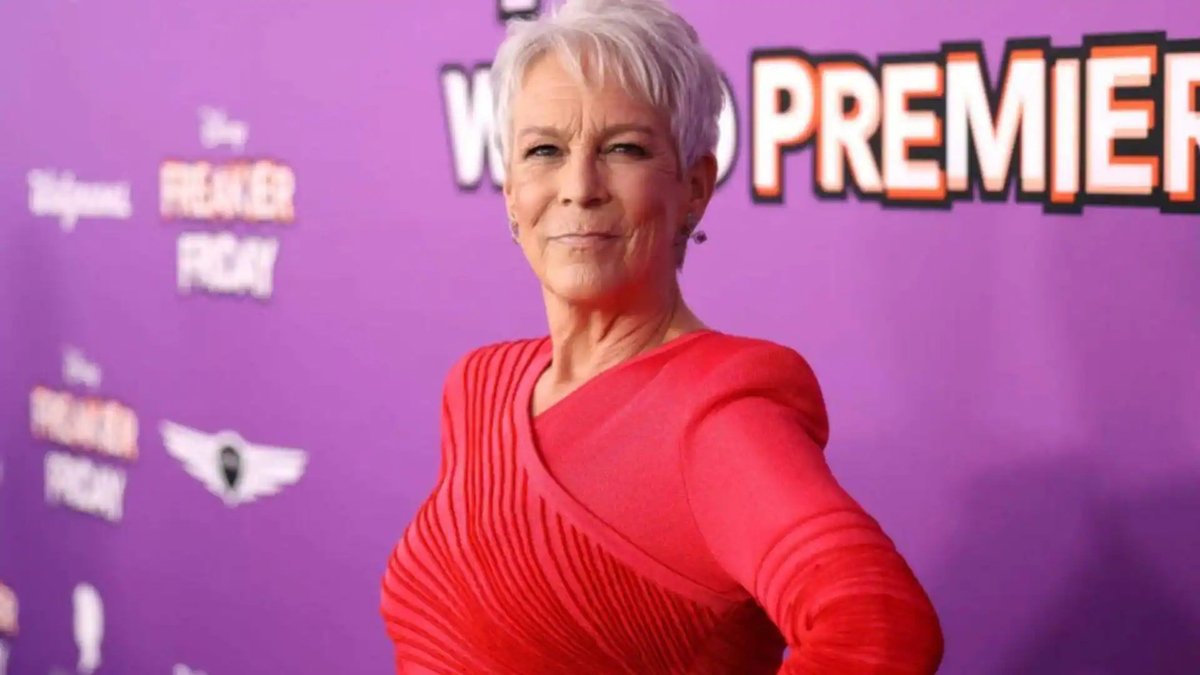
For decades, Hollywood has loved to put its stars in boxes. But few have defied the industry's neat classifications with as much grace, grit, and good humor as Jamie Lee Curtis. From the blood-curdling screams of her early horror films to the uproarious laughter of her comedic triumphs, [keyword: Jamie Lee Curtis's Career Shift: From Scream Queen to Comedy Star] isn't just a fascinating story of professional evolution; it’s a masterclass in resilience, versatility, and authentic self-expression in a business that constantly tries to pigeonhole talent.
What does it take to transcend a defining label and continually reinvent yourself, not just once, but throughout a storied career spanning over four decades? We’re not just talking about a simple genre hop; this is a radical transformation that saw a horror icon blossom into an Academy Award-winning actress, beloved for her ability to navigate any role, from the absurd to the profound.
At a Glance: Jamie Lee Curtis's Unconventional Path to Stardom
- From Hollywood Royalty to Horror's Darling: The daughter of Tony Curtis and Janet Leigh, Jamie Lee carved her own path, initially dominating the horror genre.
- The Birth of a "Scream Queen": Rose to fame in the late 70s and early 80s with iconic roles in films like Halloween, The Fog, and Prom Night.
- The Great Escape: First Forays into Comedy: Successfully broke typecasting with sharp comedic performances in Trading Places and A Fish Called Wanda.
- Beyond Laughs and Screams: Demonstrated immense versatility in dramas (My Girl), action films (True Lies), and even independent cinema.
- A Triumphant Return: Revisited her horror roots with the modern Halloween trilogy, adding depth and gravitas to her legendary character, Laurie Strode.
- The Ultimate Validation: Crowned with an Academy Award for Best Supporting Actress, solidifying her status as a versatile, powerhouse performer.
- An Authentic Icon: Beyond acting, recognized for her unwavering advocacy for mental health, addiction recovery, and LGBTQ+ rights.
The Unlikely Ascent of a Scream Queen: Setting the Stage
When you're born into Hollywood royalty – your mother is Janet Leigh, the legendary star of Psycho, and your father is Tony Curtis, the charming lead of Some Like It Hot – the expectations are undoubtedly high. Yet, Jamie Lee Curtis didn't ride on coattails. Born November 22, 1958, she forged a path uniquely her own, one that, perhaps ironically given her lineage, first led her straight into the heart of cinematic terror.
Her initial breakthrough came with a role that would define her for decades: Laurie Strode in John Carpenter's seminal horror film, Halloween (1978). As the resourceful and terrified babysitter, Curtis became the ultimate "final girl," a prototype for courage in the face of insurmountable evil. This role, along with subsequent performances in a slew of early 80s horror flicks like The Fog (1980), Prom Night (1980), and Terror Train (1980), quickly cemented her status as the definitive "Scream Queen."
This wasn't just a catchy nickname; it was a brand. For a period, it seemed Hollywood could only see her through the lens of a horror victim, albeit a supremely effective one. Her ability to convey raw fear and resilience made her a household name, but it also threatened to typecast her indefinitely. The challenge loomed: how do you escape the shadow of a label, especially one so deeply etched into popular culture?
Breaking the Mold: The First Laughs Emerge
The leap from perpetual terror to side-splitting humor might seem insurmountable for many actors. Yet, for Curtis, it wasn't just a risk; it was a deliberate, career-defining maneuver that began to hint at the depths of her talent. The early 1980s saw her start to explore new territories, signaling a shift away from the relentless pursuit of horror roles.
Her pivotal move into comedy came with the 1983 classic, Trading Places. Directed by John Landis, this film paired her with comedic heavyweights Eddie Murphy and Dan Aykroyd. Here, Curtis played Ophelia, a witty, street-smart sex worker with a heart of gold who helps the disgraced stockbroker Louis Winthorpe III (Aykroyd). It was a departure not only in genre but in character type, allowing her to showcase a sharpness and comedic timing entirely new to audiences accustomed to seeing her in peril.
Her performance in Jamie Lee Curtis in Trading Places was lauded by critics and audiences alike. She wasn't just a supporting player; she held her own against two of the biggest comedic stars of the era, proving her versatility and earning a BAFTA Award for Best Supporting Actress. This role was a crucial turning point, demonstrating that her range extended far beyond the confines of horror. It showed producers and casting directors that she possessed an innate ability to deliver punchlines with precision and embody complex, charming characters.
Following Trading Places, she continued to dabble in different genres. While Grandview, U.S.A. (1984) and Perfect (1985) didn't achieve the same critical acclaim, they were vital steps in her journey to diversify. They allowed her to experiment, to find her footing in a variety of roles, and to distance herself further from the "Scream Queen" moniker. This period was less about blockbuster hits and more about strategic career building, setting the stage for even bigger comedic triumphs.
Mastering the Art of Comedy: From Witty Heists to Explosive Laughs
By the late 1980s, Jamie Lee Curtis had firmly established herself as more than just a horror star; she was a legitimate comedic force. Her role as Wanda Gershwitz in the 1988 cult classic A Fish Called Wanda remains one of her most iconic comedic performances. Playing a cunning, seductive, and surprisingly vulnerable jewel thief, Curtis captivated audiences with her impeccable timing, physical comedy, and undeniable chemistry with co-stars John Cleese, Kevin Kline, and Michael Palin. The film was a global sensation, and her performance earned her another BAFTA nomination, cementing her status as a comedic actress of the highest caliber.
What made her comedic performances so effective? It wasn't just the lines; it was her commitment. Whether it was the deadpan delivery, the sudden bursts of emotion, or her willingness to embrace the absurdity of a situation, Curtis proved she could fully inhabit a comedic character. She understood that comedy often comes from truth and vulnerability, even in exaggerated scenarios.
This period of exploration culminated in her stellar turn in James Cameron's 1994 action-comedy True Lies. Starring opposite Arnold Schwarzenegger, Curtis played Helen Tasker, a seemingly ordinary housewife who discovers her husband is a secret agent. Her character's transformation from bored suburbanite to accidental action hero provided immense comedic fodder, but also showcased her dramatic chops and physical prowess. The scene where she performs a striptease for her husband, unaware she's being watched by her family, is a masterclass in comedic discomfort and confidence. Her performance was a triumph, earning her a Golden Globe Award for Best Actress – Motion Picture Musical or Comedy. True Lies was a blockbuster that solidified her as a multifaceted star capable of seamlessly blending action, comedy, and drama. It was a testament to her unique ability to infuse humor and humanity into every character, regardless of genre.
Beyond Genre Labels: Drama, Action, and Depth
While her comedic roles garnered significant attention, Jamie Lee Curtis was quietly building a diverse portfolio of dramatic and action-oriented performances that further illustrated her range. These roles were crucial in challenging any remaining industry perceptions that she was primarily a "scream queen" or "comedy star."
Take, for instance, her performance in the 1986 drama Dominick and Eugene. Here, she played a compassionate medical student, Jenny Reston, who forms a bond with the intellectually disabled Dominick. It was a subtle, heartfelt role that required immense empathy and restraint, a far cry from the heightened emotions of her horror films or the broad strokes of her comedies. Similarly, her role in the 1991 drama My Girl showcased a tender, maternal side as Shelly DeVoto, the kind-hearted makeup artist who becomes a surrogate mother figure. These performances, though perhaps not box office juggernauts, were critical for her artistic development and for proving her dramatic weight.
In the realm of action, her work wasn't limited to True Lies. In Kathryn Bigelow's 1990 thriller Blue Steel, Curtis played a rookie NYPD officer who becomes entangled with a serial killer. It was a gritty, intense performance that highlighted her physical capabilities and her ability to portray strength and vulnerability under pressure. These diverse projects allowed her to work with acclaimed directors and explore complex human emotions, adding layers to her already impressive skill set.
This willingness to pivot, to seek out roles that challenged her and expanded her craft, became a hallmark of her career. She wasn't just chasing fame or fortune; she was pursuing artistic fulfillment, proving that a true actor can thrive in any setting, given the right material and dedication.
Returning to Haddonfield: Reclaiming Laurie Strode
Perhaps one of the most remarkable aspects of Jamie Lee Curtis's career trajectory is her decision to revisit her horror roots, not as a step back, but as a deliberate and powerful reclamation of her legacy. After years of diversification, she returned to the Halloween franchise, notably with Halloween H20: 20 Years Later (1998) and then the more recent trilogy beginning with Halloween (2018), Halloween Kills (2021), and Halloween Ends (2022).
These weren't the roles of a young woman fleeing a masked killer. Instead, Curtis portrayed Laurie Strode as a survivor haunted by trauma, a fierce matriarch prepared to defend her family and confront her tormentor, Michael Myers, once and for all. This return allowed her to infuse the character with decades of life experience, pain, and unyielding strength. It was a mature, nuanced performance that redefined what a "final girl" could be: not just a victim, but a warrior.
Her performances in the recent Halloween films were widely praised, not only for their nostalgic appeal but for their emotional depth. She brought gravitas and a lived-in authenticity to Laurie, transforming her from an archetype into a fully realized, complex character. It was a testament to her growth as an actress that she could return to her defining role and imbue it with new meaning, demonstrating that the "Scream Queen" could also be a nuanced dramatic actress, even within the genre that first made her famous. This wasn't a retreat; it was an evolution, proving that embracing one's past can be a powerful act of creative assertion.
The Pinnacle: An Oscar for Everything Everywhere All at Once
While Jamie Lee Curtis had enjoyed a long and celebrated career, winning prestigious awards like the Golden Globe and BAFTA, there was one ultimate validation that eluded her: an Academy Award. That changed spectacularly with her unforgettable performance in the critically acclaimed 2022 film, Everything Everywhere All at Once.
In this mind-bending, genre-defying movie, Curtis played Deirdre Beaubeirdre, an IRS inspector who transforms into various multiverse versions, from a formidable auditor to a romantic figure with hot dogs for fingers. It was a role that perfectly showcased her unique ability to blend absurdity with profound emotional depth. She was at once terrifying, hilarious, and deeply moving, often within the same scene. Her transformation, both physical and emotional, was breathtaking.
Her win for Best Supporting Actress at the 2023 Academy Awards was more than just an accolade for a single performance; it felt like a lifetime achievement award wrapped in one brilliant role. It was a recognition of her entire journey – from the "Scream Queen" who outran Michael Myers, to the comedic genius who stole scenes with her wit, to the dramatic actress who brought humanity to complex characters. The Oscar was the ultimate confirmation of her versatility, resilience, and the sheer joy she brings to her craft. It cemented her legacy not just as a genre icon, but as a true cinematic artist.
Jamie Lee Curtis: The Advocate and Role Model Beyond the Screen
Beyond her impressive on-screen transformations, Jamie Lee Curtis has cultivated an equally impactful persona as an authentic and outspoken advocate. Her journey of reinvention extends far beyond Hollywood sets, into the crucial arenas of social justice and personal wellness. She actively uses her platform to champion causes close to her heart, revealing a depth of character that resonates profoundly with audiences worldwide.
One of her most significant contributions has been her candidness about mental health awareness and addiction recovery. Curtis has openly discussed her personal struggles with anxiety, depression, and opioid addiction, sharing her journey to sobriety with remarkable honesty. Her transparency helps destigmatize these issues, offering hope and solidarity to countless individuals facing similar challenges. She speaks out about the importance of seeking help, advocating for better resources, and fostering environments of compassion and understanding.
Furthermore, Curtis is a vocal supporter of LGBTQ+ rights, passionately advocating for equality and acceptance. Her advocacy often stems from personal experience, reflecting her deep commitment to creating a more inclusive world. She also champions environmental causes, using her voice to raise awareness about climate change and sustainable living practices.
Her marriage to actor and director Christopher Guest since 1984 stands as a testament to enduring partnership in an often tumultuous industry. Their relationship, built on shared values and mutual respect, offers a grounding presence amidst her public life.
In essence, Jamie Lee Curtis has transcended the role of a mere entertainer. She has become a respected influencer and a genuine role model. Her willingness to be vulnerable, to advocate for positive change, and to live authentically has made her a beloved cultural icon, celebrated not just for her acting prowess but for her unwavering dedication to humanity.
The Enduring Legacy of Reinvention: Why Her Shift Matters
Jamie Lee Curtis's career isn't just a series of roles; it's a profound narrative about adaptability, self-belief, and the power of breaking free from expectations. Her transformation from "Scream Queen" to comedy star, and then to a universally acclaimed Oscar winner, offers invaluable lessons for anyone navigating career shifts or seeking personal growth.
- Defying Typecasting: The most obvious lesson is her successful defiance of typecasting. She actively pursued roles outside her established genre, proving that an actor's talent isn't limited by their initial breakout success. This takes courage, strategic decision-making, and a willingness to take risks.
- Embracing Versatility: Her ability to seamlessly transition between horror, comedy, drama, and action showcases an exceptional range. She didn't just play different roles; she mastered different genres, demonstrating a deep understanding of each craft's unique demands.
- Authenticity as a Superpower: Throughout her career, and especially in her public life, Curtis has maintained an undeniable authenticity. This genuine approach, whether in her acting or her advocacy, has forged a deep connection with her audience, making her journey all the more compelling.
- Resilience and Longevity: Hollywood is notoriously fickle. To remain relevant and critically acclaimed for over four decades, continually evolving and challenging herself, is a testament to her resilience and dedication to her craft. She didn't just survive; she thrived.
- Reclaiming One's Narrative: Her return to the Halloween franchise wasn't just a paycheck; it was an opportunity to redefine Laurie Strode on her own terms, bringing wisdom and strength to a character that had defined her early career. It showed that you can revisit your past with new perspective and power.
Jamie Lee Curtis's career shift isn't just a story for film buffs; it's a blueprint for anyone aspiring to break barriers, redefine themselves, and leave an indelible mark on the world, both on and off the stage.
Your Burning Questions About Jamie Lee's Evolution, Answered
Let's tackle some common curiosities about Jamie Lee Curtis's remarkable journey.
Was Jamie Lee Curtis always good at comedy, or did she learn?
While she had a natural wit and charm, her comedic timing was honed through experience. Trading Places was a major turning point, allowing her to work with comedic masters and discover her aptitude for the genre. She learned to embrace the physical and intellectual demands of comedy, demonstrating that skill often grows with opportunity and practice.
How did her parents' careers influence her own?
Jamie Lee Curtis has often spoken about the "shadow" of her famous parents, Tony Curtis and Janet Leigh. While their legacy opened doors and provided insight into the industry, it also motivated her to carve out her own identity and prove her talent independently. Her mother's iconic horror role in Psycho might have even subconsciously drawn her to Halloween, yet Jamie Lee ultimately diversified far beyond what her parents were typically known for.
What was the biggest risk she took in her career shift?
Breaking away from the "Scream Queen" label after so much success was arguably her biggest risk. The industry loves a defined brand, and stepping into the unknown of comedy, especially with Trading Places, could have easily backfired. Instead, it launched her into a new dimension of stardom.
Does she prefer comedy or horror?
Jamie Lee Curtis has expressed a love for both, but for different reasons. She enjoys the collaborative and often playful nature of comedy, as well as the challenge of dramatic roles. Her return to horror, however, demonstrated a deep respect for the genre that gave her her start, and a desire to give Laurie Strode a fitting, powerful conclusion. Her Oscar win for Everything Everywhere All at Once, a film blending multiple genres, perhaps best reflects her preference for rich, multifaceted storytelling.
How does her activism impact her career choices today?
Her activism doesn't necessarily dictate every role she takes, but it certainly informs her public persona and the causes she champions. She's become more discerning, using her platform for positive change. Her roles increasingly reflect a desire to portray strong, authentic women, aligning with her real-life commitment to social justice. Her choices often reflect her values, making her an actress with a clear moral compass.
Embracing Your Own "Career Shift": Lessons from Jamie Lee
Jamie Lee Curtis's journey isn't just about an actress; it's a compelling case study in reinvention that transcends the entertainment industry. Her career arc offers powerful inspiration for anyone feeling stuck, typecast, or simply ready for a new chapter in their professional life.
Here’s how you can apply lessons from her shift to your own path:
- Don't Let Your Past Define Your Future: Just because you've been known for one thing doesn't mean you're limited to it. Identify the skills you've gained, even in seemingly unrelated areas, and consider how they can translate to new opportunities. Jamie Lee took her resilience from horror and applied it to character development in comedy and drama.
- Strategic Risk-Taking is Key: Her move into Trading Places was a calculated risk. It wasn't a blind leap; it was an opportunity to work with respected talent in a different genre. Look for chances to pivot that leverage existing strengths while pushing you into new territory.
- Invest in Versatility: Don't just stick to what you know. Actively seek out learning experiences, new projects, or training that expand your skillset. The more versatile you become, the more options you'll have for your next chapter.
- Embrace and Reclaim Your Roots (If You Choose): Sometimes, a "shift" means returning to where you started, but with a new perspective. Jamie Lee didn't abandon Laurie Strode; she redefined her. How can you revisit past experiences or skills with fresh eyes and renewed purpose?
- Authenticity Resonates: Whether you're pitching a new idea, interviewing for a job, or building a personal brand, being genuinely yourself is your most powerful asset. Jamie Lee's honesty about her personal struggles has only deepened her connection with audiences, proving that vulnerability can be a strength.
- It's a Marathon, Not a Sprint: Her Oscar win came after over 40 years in the business. Career shifts and ultimate recognition often take time, persistence, and continuous effort. Celebrate small victories and stay committed to your long-term vision.
Jamie Lee Curtis’s evolution is a potent reminder that a career is rarely a straight line. It’s a dynamic, living thing that thrives on curiosity, courage, and a relentless pursuit of growth. So, if you're standing at a crossroads, pondering your next move, remember the Scream Queen who learned to make us laugh, cry, and ultimately, stand up and cheer. Your next act might just be your most brilliant one yet.