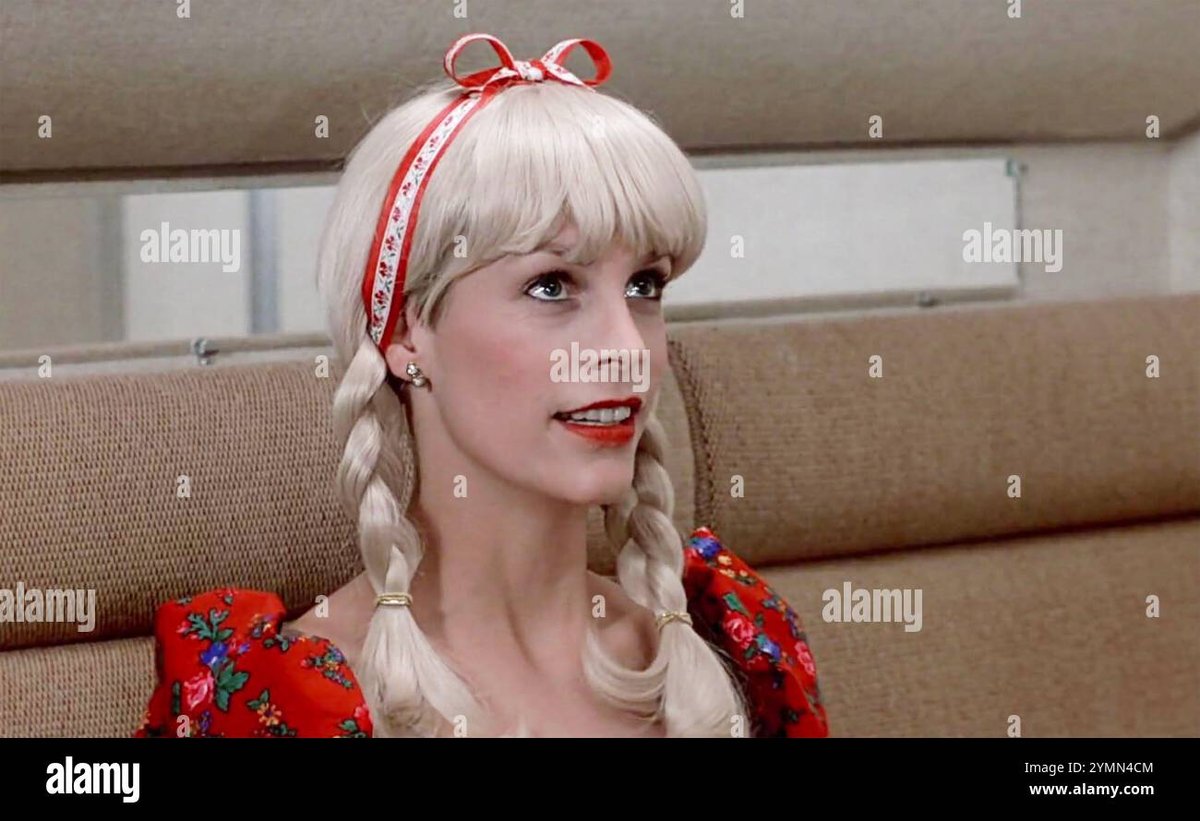
Jamie Lee Curtis's portrayal of Ophelia in Trading Places wasn't just another role; it was a defiant declaration, a strategic pivot that forever altered the trajectory of her career. Before this 1983 comedy, audiences knew her almost exclusively as the quintessential "scream queen," a title she earned through relentless performances in horror films. But in director John Landis's sharp satire, Curtis stepped out of the shadows and into the spotlight of mainstream comedy, proving her range, wit, and undeniable screen presence. This wasn't merely a change of genre; it was a fundamental redefinition, setting the stage for the diverse, acclaimed career she enjoys today, culminating in an Academy Award win decades later.
At a Glance: Ophelia's Impact
- Career Game-Changer: Trading Places was the pivotal film that allowed Jamie Lee Curtis to shed her "scream queen" image and transition into comedic roles.
- Unexpected Heroine: She portrayed Ophelia, a resourceful and morally grounded sex worker who becomes an unlikely ally to the downtrodden protagonists.
- John Landis's Vision: Director John Landis championed Curtis's casting, recognizing her comedic potential against Paramount's initial reservations.
- Financial & Critical Success: The role earned her $1 million and critical acclaim, leading directly to future comedic triumphs like A Fish Called Wanda.
- Lasting Legacy: Curtis herself credits Trading Places as foundational to her career, laying the groundwork for her eventual Oscar win.
The "Scream Queen" Sheds Her Skin: A Desperate Bid for Change
By the early 1980s, Jamie Lee Curtis was synonymous with horror. Her chilling performances in the Halloween series and other fright flicks had cemented her status as the era's undisputed "scream queen." While this niche brought her recognition, it also threatened to pigeonhole her, limiting her opportunities and obscuring her broader acting talents. She yearned to break free, to prove she was more than just a terrified victim running from a masked killer. The opportunity to do so, however, was far from a given.
Hollywood, like any industry, loves to categorize. Once an actor is successful in a particular genre, it's incredibly difficult to convince studios and audiences that they can excel elsewhere. For Curtis, leaving the horror genre wasn't just a creative desire; it was a strategic imperative for long-term career viability. She needed a role that would not only showcase a different facet of her abilities but also come from a film with enough commercial and critical weight to command attention. Trading Places, with its all-star cast, acclaimed director, and razor-sharp script, presented that perfect, albeit challenging, opening.
Ophelia: An Unconventional Ally with a Moral Compass
In Trading Places, Curtis plays Ophelia, a street-smart sex worker in Philadelphia who encounters Louis Winthorpe III (Dan Aykroyd) after his life has been systematically dismantled by the manipulative Duke brothers. Instead of being a mere damsel in distress or a one-dimensional character, Ophelia is depicted as pragmatic, resourceful, and surprisingly principled. She offers Winthorpe shelter and support, not out of pure altruism, but in exchange for a future financial reward once he inevitably regains his fortune. This clear-eyed transactional agreement, however, doesn't diminish her fundamental decency.
Ophelia becomes an indispensable part of the unlikely quartet—Winthorpe, Billy Ray Valentine (Eddie Murphy), and Winthorpe's butler Coleman—who plot revenge against the Duke brothers. Her street smarts, common sense, and unwavering loyalty are crucial to their elaborate financial scheme. She's intelligent, perceptive, and holds her own amongst the men, never allowing herself to be underestimated. In a film that critiques social conventions and economic disparities, Ophelia stands out as a character who navigates a difficult life with integrity and agency, embodying a kind of moral compass within the chaotic world of the film.
A Risky Bet That Paid Off: Landis Fights for Curtis
The casting of Jamie Lee Curtis as Ophelia was far from a foregone conclusion. Paramount Pictures, the studio behind Trading Places, was hesitant. They saw her as a horror actress, and the idea of her in a major comedy role was a gamble they were reluctant to take. However, director John Landis saw something different. He had observed Curtis's natural humor while she narrated his documentary Coming Soon, and he was convinced she had the comedic chops required for Ophelia. Landis fought hard for her, pushing against the studio's typecasting.
His conviction ultimately paid off, both for Curtis and for the film. Her performance in Trading Places was a revelation, perfectly balancing humor, empathy, and resilience. The film was a massive box-office success, grossing over $90.4 million in the U.S. and Canada and $120.6 million worldwide, making it the fourth-highest-grossing film of 1983. For Curtis, the role came with a substantial $1 million paycheck and, more importantly, the validation she needed to prove her versatility. It directly enabled her to transition from the niche world of horror to a broader, more diverse acting career. This pivotal moment allowed Jamie Lee Curtis in Trading Places to redefine her public image and demonstrate a comedic talent previously unseen by mainstream audiences.
Chemistry and Comedic Gold: Blending with the Best
Part of Ophelia's effectiveness, and by extension Curtis's success in the role, stemmed from her ability to blend seamlessly with the comedic forces of Dan Aykroyd and Eddie Murphy. Aykroyd, fresh off Saturday Night Live and The Blues Brothers, played the uptight, upper-crust Louis Winthorpe III with a mix of despair and indignation that needed a grounded counterpoint. Murphy, in only his second feature film, was a burgeoning superstar, his natural charisma and improvisational genius electrifying the screen. Curtis’s Ophelia provided an essential anchor, a voice of reason, and a source of quiet strength amidst their escalating antics.
Her performance wasn't about outshining them but complementing them. She held her own, delivering lines with a deadpan wit and conveying a genuine concern for Winthorpe's plight, even as she maintained her professional boundaries. This dynamic allowed the comedic exchanges to land with greater impact, and it gave the audience a character to root for who wasn't caught in the direct crossfire of the Duke brothers' cruel bet. Ophelia's presence elevated the emotional stakes, ensuring that beneath the raucous comedy, there was a core of human connection and redemption.
Beyond the Laughs: Ophelia's Thematic Significance
Trading Places is much more than a simple comedy; it's a social satire that delves into themes of nature versus nurture, economic inequality, and the corrupting influence of wealth. The film uses the contrast between Louis Winthorpe and Billy Ray Valentine to explore these ideas, showing how societal circumstances can drastically alter perceptions and opportunities. Ophelia, though not directly part of the Duke brothers' initial bet, plays a crucial thematic role in challenging these very concepts.
As a sex worker, Ophelia exists on the margins of society, yet she demonstrates more integrity and practicality than the supposed pillars of society, the Duke brothers, or even the initially privileged Winthorpe. Her willingness to help Winthorpe, while transactional, is ultimately driven by a belief in fair play and a desire for justice once she understands the Duke brothers' machinations. Her character subtly underscores the film's message that true worth isn't determined by one's social standing or bank account, but by character and actions. She represents the often-overlooked resilience and wisdom found outside conventional "respectable" society, serving as a vital counterpoint to the film's cynical portrayal of the elite.
The Domino Effect: From Ophelia to Wanda and Beyond
The impact of Trading Places on Jamie Lee Curtis’s career was immediate and profound. The critical and commercial success of her comedic turn caught the attention of other filmmakers, most notably John Cleese. Cleese, impressed by her performance, cast her in the 1988 heist comedy A Fish Called Wanda. This role cemented her status as a formidable comedic actress, earning her a Golden Globe nomination and further distancing her from the "scream queen" label.
From A Fish Called Wanda, Curtis went on to star in a variety of genres, demonstrating her remarkable versatility. She embraced action in True Lies, family comedy in Freaky Friday, and continued to explore dramatic roles. Decades later, when she finally won her first Academy Award for Best Supporting Actress in 2023 for Everything Everywhere All at Once, Curtis herself credited Trading Places as a foundational film in her career. She acknowledged that the film, and Landis's belief in her, opened doors that might otherwise have remained closed, allowing her to pursue the rich and varied career she built. It wasn't just a pivot; it was the launchpad.
Addressing Modern Sensibilities: A Look at the Film's Evolving Legacy
While Jamie Lee Curtis's portrayal of Ophelia remains a highlight of Trading Places, and indeed a high point in her career, it's also important to view the film through a contemporary lens. Like many comedies from the 1980s, Trading Places contains elements that have, regrettably, not aged well. The film has drawn criticism for its use of racial jokes, the offensive use of a racial slur by a character, and the blackface disguise worn by Winthorpe. Furthermore, a scene implying the sexual assault of a character by a gorilla is deeply problematic.
These issues, while distinct from Ophelia's character, are part of the broader film's legacy and are increasingly acknowledged with disclaimers on modern broadcasts. It’s crucial to separate the artistic merit and career impact of Curtis's performance from the broader problematic aspects of the film's content. Ophelia herself, as a character, largely transcends these issues, maintaining her dignity and agency. Her portrayal offered a progressive, albeit flawed, glimpse into a character type rarely afforded such depth in mainstream cinema at the time, especially one who subverts traditional gender roles and expectations.
A Legacy Forged in Futures and Laughter
Jamie Lee Curtis's decision to take on the role of Ophelia in Trading Places was a calculated risk that paid off exponentially. It wasn't merely a departure from horror; it was a reinvention. She moved from being a typecast actress to a versatile performer capable of eliciting genuine laughs and heartfelt emotion. The film not only revitalized her career but set her on a path that would see her become one of Hollywood's most respected and enduring talents.
Her Ophelia is a testament to the power of a well-written character and an actress's ability to embody it with nuance and strength. She was the unexpected moral center of a chaotic, comedic world, proving that a character on the social periphery could be the one with the clearest vision. For audiences and for Curtis herself, Trading Places solidified her place not just as a "scream queen," but as a true queen of comedy and an actress with boundless range, all thanks to the clever, compassionate, and unforgettable Ophelia.