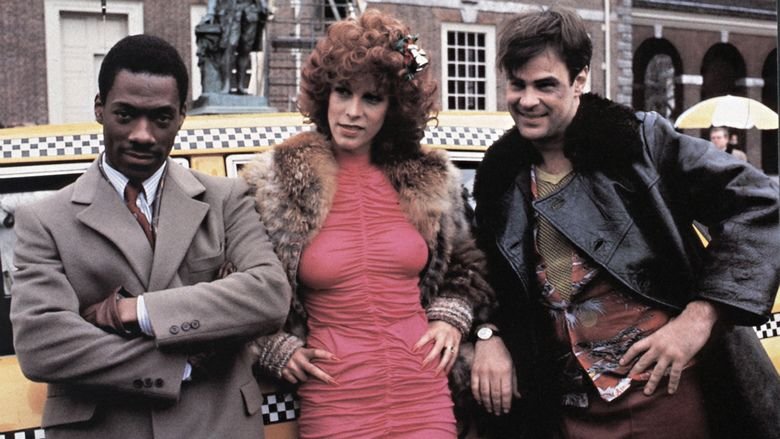
A simple bet, a shocking social experiment, and a searing look at the arbitrary nature of wealth: the Trading Places plot, themes, and social commentary have captivated audiences for decades, making it far more than just a holiday comedy. Released in 1983, John Landis's film masterfully blends laugh-out-loud humor with sharp-edged satire, holding a mirror up to society’s obsession with class, privilege, and the notion of meritocracy. It's a tale that proves how easily fortunes can turn, and how an understanding of human nature (and the commodities market) can be the ultimate equalizer.
At a Glance: What Makes "Trading Places" Timeless
- Plot Core: Two wealthy brothers, the Dukes, make a dollar bet to swap the lives of a snobby Ivy League broker and a street-smart hustler.
- Key Characters: Louis Winthorpe III (the privileged executive), Billy Ray Valentine (the resourceful con artist), Mortimer and Randolph Duke (the manipulative brothers), Ophelia (the pragmatic prostitute), and Coleman (the loyal butler).
- Central Experiment: Can environment or genetics determine success? The Dukes believe it's environment, but their subjects prove them wrong in unexpected ways.
- Market Manipulation: The climactic revenge plot unfolds on the commodities trading floor, exploiting the frozen concentrated orange juice futures market.
- Major Themes: Class and privilege, nature vs. nurture, greed, social mobility, and the true meaning of wealth.
- Enduring Commentary: A critique of Wall Street, systemic inequality, and the illusion of the American Dream.
The Set-Up: A Dollar Bet, A Social Experiment
Our story begins in the exclusive, rarefied world of Duke & Duke, a Philadelphia-based commodities brokerage run by the ultra-wealthy, aristocratic brothers Mortimer and Randolph Duke. These titans of industry, ensconced in their lavish lives, embody the epitome of old money and ingrained privilege. Their lives are meticulously ordered, their social circles impenetrable, and their view of the world deeply rooted in their own self-serving ideology.
Into this opulent setting steps Louis Winthorpe III, played by Dan Aykroyd. Winthorpe is a managing director at Duke & Duke, a Harvard-educated, flawlessly tailored embodiment of WASPish entitlement. His mornings involve his butler, Coleman (Denholm Elliott), preparing his every need, his evenings are spent at exclusive clubs, and his fiancée, Penelope (Kristin Holby), is as perfectly polished as he is. Winthorpe represents the "nature" side of the Duke brothers' coming experiment — a product of their elite world.
On the other side of the tracks, quite literally, is Billy Ray Valentine, portrayed by Eddie Murphy. Valentine is a quick-witted, charming street hustler from the rougher parts of Philadelphia. He lives by his wits, often feigning various disabilities to solicit spare change, his life a stark contrast to Winthorpe's gilded cage. Valentine represents the "nurture" side, a man forged by the harsh realities of the street.
The Duke brothers, in a moment of cynical boredom, strike a dollar bet: can they take Winthorpe’s privileged life away and give it to Valentine, and vice versa? Will the environment determine their success, or will their inherent "nature" prevail regardless of their surroundings? The stage is set for a cruel, yet hilariously insightful, social experiment.
The Grand Swap: From Boardroom to Street, and Vice Versa
The Dukes swiftly set their plan in motion, orchestrating a brutal takedown of Louis Winthorpe III. They frame him for drug possession and theft, planting evidence and ensuring he's publicly humiliated. Winthorpe loses everything: his prestigious job, his luxurious home, his high-society fiancée, and his impeccable reputation. Stripped of his identity and support system, he is cast out into the cold, harsh reality he once disdained. He finds himself alone, destitute, and desperate, navigating a world utterly alien to him.
Simultaneously, the Duke brothers bail Billy Ray Valentine out of jail and install him in Winthorpe's former life. They provide him with a substantial salary, a lavish home, and a position at Duke & Duke. Valentine, initially bewildered and overwhelmed by the sudden change, quickly proves to be a natural. His street smarts translate surprisingly well into the fast-paced, high-stakes world of commodities trading. He picks up the jargon, understands market dynamics with an intuitive flair, and even begins to impress his colleagues. The Dukes' initial hypothesis – that environment dictates success – seems to be playing out.
However, Winthorpe's descent is not without unexpected encounters. He finds an unlikely ally in Ophelia, a pragmatic and kind-hearted prostitute played by Jamie Lee Curtis. Ophelia, despite her profession, offers Winthorpe genuine compassion and a roof over his head, albeit a modest one. She sees beyond his former status and helps him navigate his new, harsh reality. Her no-nonsense attitude and practical wisdom become crucial to Winthorpe's survival and eventual transformation.
As Winthorpe spirals further into despair, Valentine's new life continues to flourish, creating a stark visual contrast that underscores the Dukes' cruel game.
Unmasking the Manipulators: The Bet Revealed
The turning point arrives when Billy Ray Valentine, now comfortable in his new executive role, overhears a damning conversation between the Duke brothers. They are discussing their dollar bet, openly gloating about their manipulation of Winthorpe and Valentine’s lives. The revelation is a shock, confirming the cruel, calculated nature of their "experiment."
This discovery sparks a profound shift in Valentine. He realizes he is merely a pawn in their game, and his newfound success is built on another man's ruin. The initial joy of his transformation curdles into a desire for justice. He tracks down Winthorpe, who by this point is living a truly desperate existence, even attempting suicide.
It's here that the film transitions from individual struggles to collective action. Winthorpe, Valentine, Ophelia, and Coleman (Winthorpe’s former butler, who has also been discarded by the Dukes) form an unlikely alliance. Their shared indignation and desire for retribution against the manipulative Duke brothers bind them together. They realize the only way to truly "win" is to beat the Dukes at their own game – on their own turf, using their own rules.
The Sweetest Revenge: Orchestrating the Downfall on Wall Street
The group's revenge plot is a meticulously crafted scheme, exploiting the very market the Dukes believed they controlled: frozen concentrated orange juice futures. Their opportunity arises when they learn the Dukes plan to use an advance copy of a confidential U.S. Department of Agriculture crop report to make a massive, insider trading profit. This report, predicting a disastrous orange crop, would send prices soaring.
The plan is audacious and requires perfect timing. Winthorpe and Valentine, aided by Ophelia and Coleman, travel to New York City and infiltrate the chaotic trading floor. Their strategy involves feeding the Dukes a fraudulent crop report, which falsely predicts a bountiful harvest. Believing this fake report, Winthorpe and Valentine then short sell a massive amount of frozen concentrated orange juice futures. Short selling, in simple terms, means betting that the price of an asset will fall.
The Dukes, meanwhile, acting on what they think is exclusive insider information about a bad crop, heavily invest their own money, buying vast quantities of orange juice futures, driving the price sky-high. Other traders, seeing the Dukes' aggressive buying, follow suit, further inflating the price.
Just as the market reaches its peak, the true crop report is finally released. This report reveals a completely normal, healthy orange crop, contradicting the Dukes' expectations. Panic ensues. The price of frozen concentrated orange juice futures plummets. The Dukes, having bet everything on a price increase, face massive losses. They cannot meet their margin calls, and the Exchange Manager quickly liquidates all their assets. In a matter of minutes, the Duke brothers lose nearly $400 million, their empire crumbling around them.
Winthorpe and Valentine, having successfully short-sold at the inflated prices, reap immense profits as the market crashes. They explain the "nature vs. nurture" wager to the ruined Dukes, with Valentine collecting the symbolic dollar bet. The film wraps up with the Dukes' henchman, Beeks, mistakenly locked in a gorilla cage and shipped to Africa, while Winthorpe, Valentine, Ophelia, and Coleman enjoy a well-deserved, luxurious vacation, wealthy and triumphant.
Beyond the Laughs: Key Themes Unpacked
Beyond the slapstick and sharp dialogue, "Trading Places" delivers a potent dose of social commentary through its exploration of several enduring themes.
Class and Privilege: A House of Cards
The most prominent theme is the arbitrary nature of class and privilege. The film vividly demonstrates how easily a person's social standing can be stripped away or bestowed, often with little regard for their actual abilities or character. Winthorpe, initially dismissive of those less fortunate, quickly learns that his esteemed position was less about his inherent worth and more about the inherited advantages of his birth. His fall from grace forces him to confront his own prejudices and limitations. Conversely, Valentine's swift adaptation to high society challenges the notion that breeding or education are prerequisites for success. The film suggests that the distinctions between the "haves" and "have-nots" are often constructed and maintained by those in power, rather than being an immutable reflection of individual merit.
Nature vs. Nurture: A Dollar's Worth of Proof
At the heart of the plot is the Duke brothers' infamous wager: is success determined by one's environment (nurture) or by innate qualities (nature)? While the Dukes initially believe their experiment proves nurture is paramount (Valentine thrives, Winthorpe falters), the ultimate outcome suggests a more complex truth. Valentine's street smarts and quick wit, honed by a lifetime of navigating difficult situations, prove invaluable in the fast-paced world of trading. He adapts, learns, and excels, not because he was born into privilege, but because his "nature" equipped him with resourcefulness. Winthorpe, once detached and pampered, finds his underlying resilience and capacity for connection when stripped of his comforts. The film subtly argues that while environment plays a significant role, inherent character and adaptability are equally, if not more, crucial.
Greed and Corruption: The Engine of Wall Street
"Trading Places" paints a stark, albeit comedic, picture of the ruthless world of finance. The Duke brothers embody unbridled greed, willing to manipulate lives and markets for personal gain, seeing people as mere instruments for their amusement and profit. Their willingness to engage in insider trading and destroy lives highlights the moral vacuum that can exist at the highest echelons of power. The film's climax, set on the bustling, cutthroat trading floor, underscores the idea that wealth accumulation, for some, is an amoral game where the only sin is losing. The consequences of their greed are severe, resulting in their spectacular downfall.
Justice and Revenge: An Unlikely Alliance
The film’s emotional core lies in the quest for justice. Winthorpe and Valentine, initially antagonists, forge a powerful bond born of mutual victimization. Their revenge plot is not just about financial gain; it's about reclaiming their dignity and proving a point to their tormentors. The alliance formed with Ophelia, played brilliantly by Jamie Lee Curtis, and Coleman symbolizes a broader solidarity among the marginalized, showing that collective action can triumph over entrenched power. The catharsis of seeing the Dukes lose everything is a powerful moment for both the characters and the audience, delivering a satisfying blow against arrogance and exploitation.
The Illusion of the American Dream
"Trading Places" subtly critiques the idealized notion of the American Dream, where hard work and merit are supposed to guarantee success. Winthorpe, born into the "dream," finds it can be yanked away in an instant. Valentine, living outside it, finds a pathway to wealth through unconventional means and a keen intellect, rather than traditional routes. The film suggests that the system is rigged, that opportunities are often dictated by birthright or manipulation, and that true mobility requires disrupting the established order.
Trading Places' Enduring Social Commentary
Decades after its release, "Trading Places" remains startlingly relevant. Its social commentary on wealth disparity, the ruthlessness of the financial sector, and the ease with which individuals can be exploited still resonates strongly today.
The film's portrayal of Wall Street, with its high-stakes gambling and casual disregard for ethical boundaries, feels less like caricature and more like prescient observation in the wake of various financial crises. The Duke brothers' belief that they can toy with human lives as if they were pawns on a chessboard reflects a deeper critique of a system that often prioritizes profit over people.
Furthermore, the discussion around "nature vs. nurture" continues to be a hot topic in debates about poverty, education, and social mobility. Does inherent talent or the environment one is raised in play a greater role in determining success? "Trading Places" doesn't offer a simple answer but rather demonstrates the complex interplay of both, challenging viewers to look beyond simplistic explanations for human behavior and societal outcomes.
The film reminds us that the veneer of civility and order in high society can hide immense cruelty, while true humanity and ingenuity can be found in the most unexpected places. It's a comedic Trojan horse, delivering sharp social critique wrapped in witty dialogue and unforgettable performances.
Characters That Resonate
The film's lasting appeal is also due to its unforgettable cast of characters, each contributing significantly to the plot and themes.
- Louis Winthorpe III (Dan Aykroyd): Winthorpe's journey from pampered snob to desperate outcast and then to resourceful schemer is the film's primary transformation arc. Aykroyd perfectly captures the initial arrogance and subsequent vulnerability, making his eventual triumph all the more satisfying.
- Billy Ray Valentine (Eddie Murphy): Murphy's breakout film performance showcases his comedic genius and natural charisma. Valentine is sharp, adaptable, and possesses an inherent understanding of human nature that serves him well, whether on the street or the trading floor. His rise challenges the Dukes' prejudices and the audience's assumptions.
- Mortimer and Randolph Duke (Don Ameche and Ralph Bellamy): The Duke brothers are delightfully vile antagonists. Their snobbery, casual cruelty, and absolute confidence in their own superiority make their eventual downfall all the more satisfying. They are archetypal villains whose motivations are purely selfish and born of boredom.
- Ophelia (Jamie Lee Curtis): Ophelia is a character who defies stereotypes. Far from a tragic figure, she is savvy, street-smart, and possesses a strong moral compass. She provides Winthorpe with much-needed support and a dose of reality, proving that kindness and pragmatism can come from unexpected places. Her role is crucial to Winthorpe's survival and the success of the revenge plot. Jamie Lee Curtis's portrayal of Ophelia adds a layer of unexpected warmth and resilience to the film.
- Coleman (Denholm Elliott): Winthorpe's loyal butler, Coleman, is a gentleman through and through. His unwavering loyalty and dry wit are a consistent source of humor and heart. His willingness to join the revenge plot highlights the deep injustice inflicted upon his former employer.
Legacy and Impact
"Trading Places" was a massive critical and commercial success, grossing $90.4 million in its theatrical run and becoming one of the highest-earning films of 1983. Its clever script, sharp direction, and pitch-perfect performances cemented its place as a comedy classic.
Beyond its box office success, the film's influence can be seen in numerous subsequent comedies that blend humor with social commentary, particularly those tackling financial themes. It effectively satirized the perceived amorality of the financial industry decades before such critiques became mainstream. Its memorable lines, iconic scenes (like the New Year's Eve train sequence), and the unforgettable chemistry between Aykroyd and Murphy have ensured its lasting cultural footprint.
The film even had a real-world impact, inspiring what is known as "The Eddie Murphy Rule" in commodity trading. Section 13(f) of the Commodity Exchange Act, passed in 2010, prohibits the use of illegally obtained nonpublic information to trade in commodity futures, directly addressing the insider trading depicted in the film.
Frequently Asked Questions
Was the commodities trading part in "Trading Places" accurate?
While dramatized for comedic effect, the film did a surprisingly good job of depicting the chaotic, high-stakes environment of a commodities trading floor. It also accurately represented the mechanics of buying and selling futures, particularly short selling and the impact of crop reports on the price of commodities like frozen concentrated orange juice. The use of real-life market dynamics lends credibility to the revenge plot.
What is the significance of the $1 bet?
The dollar bet is symbolic. For the Duke brothers, it represents the triviality of human lives in their eyes; they are so wealthy that a dollar is enough to wager over fundamentally altering two men's existences. For Winthorpe and Valentine, the dollar becomes a symbol of their victory over the Dukes' arrogance and a testament to their unlikely partnership. It highlights the vast power imbalance and the ultimate irony of the Dukes losing hundreds of millions over such a paltry sum.
What happened to the Duke brothers?
Mortimer and Randolph Duke were completely ruined. They lost nearly $400 million, their entire fortune, due to Winthorpe and Valentine's masterful manipulation of the orange juice futures market. The Exchange Manager liquidated all their assets, leaving them penniless. Their final scene shows them utterly defeated and humiliated.
How did Jamie Lee Curtis's character, Ophelia, contribute to the plot?
Ophelia plays a pivotal role. She is the first person to show genuine kindness and aid to Winthorpe after he loses everything. Her practical knowledge of navigating the streets and her no-nonsense attitude help him survive his lowest point. More importantly, she becomes an integral part of the revenge scheme, contributing her intelligence and resourcefulness to the intricate plan against the Duke brothers. She's not just a love interest; she's a crucial ally and a fully realized character.
More Than Just a Comedy: What Trading Places Teaches Us Today
"Trading Places" is far more than a simple holiday comedy. It's a masterclass in social satire, using humor to dissect complex issues of class, power, and the human condition. The film forces us to question our own assumptions about success and failure, and challenges the notion that wealth inherently signifies worth or that poverty indicates a lack of ability.
Its enduring appeal lies in its ability to blend sharp wit with genuine heart, delivering a cathartic tale of underdogs triumphing over arrogant elites. As the world continues to grapple with economic inequality and the ever-present allure of quick money, the Trading Places plot, themes, and social commentary offer a timeless, often uncomfortable, yet ultimately hopeful message: humanity, ingenuity, and solidarity can still prevail against even the most formidable forces of greed and privilege. It encourages us to look beyond superficial appearances, challenge established norms, and perhaps, even consider making our own dollar bets on the true nature of success.